Can a QR code be the AR marker?
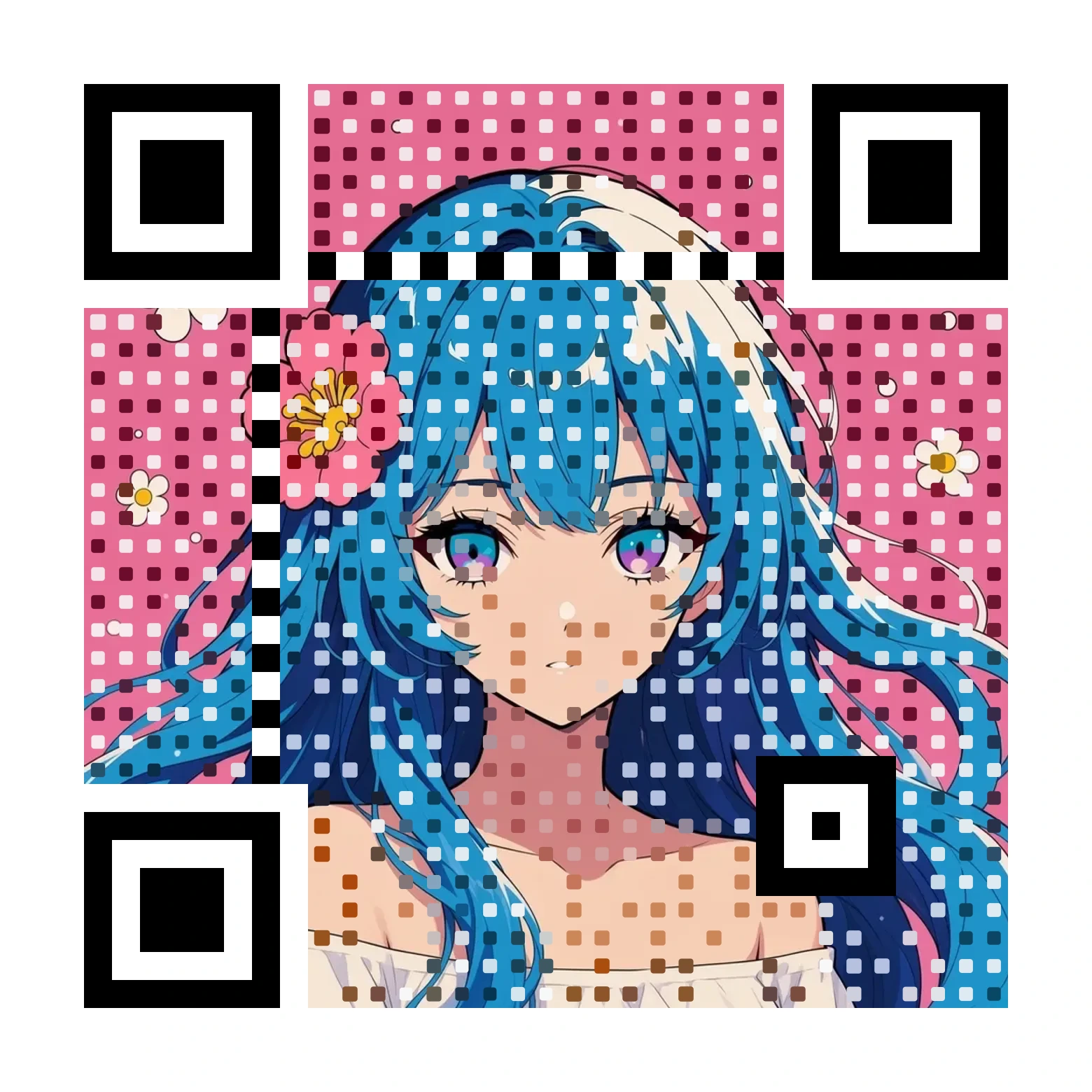
Yes — when the code is built out of the artwork rather than stamped on top of it. An art code keeps the picture's own colours and detail while carrying the data, so it has the irregular texture image tracking needs. One printed sheet then does both jobs: a phone camera scans it to open the viewer, and the viewer tracks that same sheet to anchor the augmented reality.
The three arrangements
| Code beside the art | Art code as the target | Art code as link only | |
|---|---|---|---|
| What is printed | Two things: the artwork, and a code near it | One thing: the artwork, drawn as the code | Two things, but the code is also a picture |
| What the AR tracks | The artwork | The printed code itself | The artwork |
| Best for | Framed prints, exhibitions, wall labels | Cards, stickers, labels, flyers — anything small | Packaging and placards beside untouched work |
| Artwork left untouched? | Yes | No — it becomes the code | Yes |
Why a plain QR code makes a poor marker
Image tracking follows detail that is distinctive and uneven — corners, texture, places the picture does something unusual. An ordinary black-and-white QR code is the opposite: a regular grid of identical squares, repetitive by design. Repetition is the hardest thing to follow from frame to frame, because one square looks exactly like its neighbour, and every plain code looks much like every other. Artwork supplies what a grid cannot. That is the real reason an art code can be tracked while a stock code cannot: the picture is still in there. How image tracking works covers the detail side of this in more depth.
When to make the code the target
Choose it when one printed piece has to do everything and there is no room for a second mark: a trading card, a sticker, a product label, a flyer, a business card. The buyer points their camera once, the page opens, and the same sheet is already the thing the AR holds onto.
Keep them separate when the artwork is the point. A framed print or an exhibited piece should stay exactly as the artist made it — put the code on the wall label, the backing board or an insert, and let the untouched artwork be the marker. In Interart that is a switch on the design rather than a different product: the art code can be the published tracking target, or the plain artwork stays the target and the code is only the link.
What makes an art code scan reliably
Three things, and they are all measurable. Verification: every code Interart publishes is read back by two independent decoders across nine simulated camera conditions — small in the frame, motion-blurred, and held at an angle — and a code that fails is never published. Error correction: codes are generated at the highest level, so roughly a third of the pattern can be obscured, worn or misread and the link still resolves; that budget is what pays for the artwork showing through. Module size: the squares that make up a code have to survive the print. Fewer, larger modules scan from further away, so the code carries as short a link as possible — which is why a published Interart design uses a short link rather than a long URL.
Print size matters more than file size. A code roughly 60 mm across is comfortable for a phone at arm's length; much smaller than 40 mm and you are relying on a steady hand and good light. Keeping AR art alive covers the durability side — what happens to printed codes over years.
Questions, answered
Can a QR code be the AR marker? Yes, if the code is made out of the artwork rather than printed on top of it. An art code keeps the picture's own colours and detail while carrying the data, so it has enough visual texture for image tracking to lock onto. One printed sheet then does both jobs: a phone camera scans it to open the viewer, and the viewer tracks that same sheet to anchor the AR.
Does a plain black-and-white QR code work as an AR marker? Poorly. Image tracking follows distinctive, uneven detail, and an ordinary QR code is a regular grid of identical squares — repetitive by design, which is the hardest kind of pattern to follow between frames. It also looks like every other code, so tracking can confuse one for another. Artwork carries the irregular detail that tracking wants.
Should the code always be the AR target? No. Choose it when one printed piece has to do everything: a card, a label, a flyer, a sticker. Keep the code separate when the artwork is the point and should stay untouched — a framed print or an exhibited work — and put the code on the wall label or the back. Interart supports both: a published design can use the art code as its tracking target, or keep the plain artwork as the target and treat the code purely as the link.
Will an art code still scan reliably? Only if it is verified, which is why Interart checks every code with two independent decoders across nine simulated camera conditions — small in frame, motion-blurred, and held at an angle — and refuses to publish one that fails. Codes use the highest error-correction level, so roughly a third of the pattern can be obscured or misread and the link still resolves.
Keep reading
QR codes vs image tracking · How image tracking works · QR code art generator · AR trading cards